


What changes for your workers
The clearest difference is what your people are breathing and wearing. Solvent based coatings carry high levels of volatile organic compounds. Water based acrylics sit far lower; many industrial water based coatings come in under 100 grams per litre, and some well below that. Less solvent in the air means less odour, lower respiratory and skin exposure, and far less reliance on heavy masks, respirators and forced ventilation to keep a space safe to work in.
Both products are non-flammable and non-toxic, with no isocyanates and water for clean-up instead of solvent. In tight or poorly ventilated spaces, or anywhere solvent contamination is a concern such as food processing areas, that matters a great deal.
The storage and handling case
For larger buyers this is often the deciding factor. Flammable solvent based paint and the thinners that go with it are dangerous goods, and the volume you can hold on site is capped by how much flammable liquid your licence and your storage setup allow. Every drum of solvent product and every tin of thinner eats into that limit.
Water based product isn't a flammable liquid, so it sits outside those limits. You can hold the stock you need without the dangerous goods storage headache, and there's no separate solvent to buy, store or dispose of. For a business running real volume, that's less compliance overhead and one less line on the purchase order.
Performance that holds up
None of this means giving up protection. Both products are water borne acrylic anti-corrosive coatings formulated with flash rust inhibitors, including protection against weld joint flash rusting. They deliver excellent water resistance, colour retention and abrasion resistance, and the Water Based Quick Dry adds strong UV protection for steel left outside.
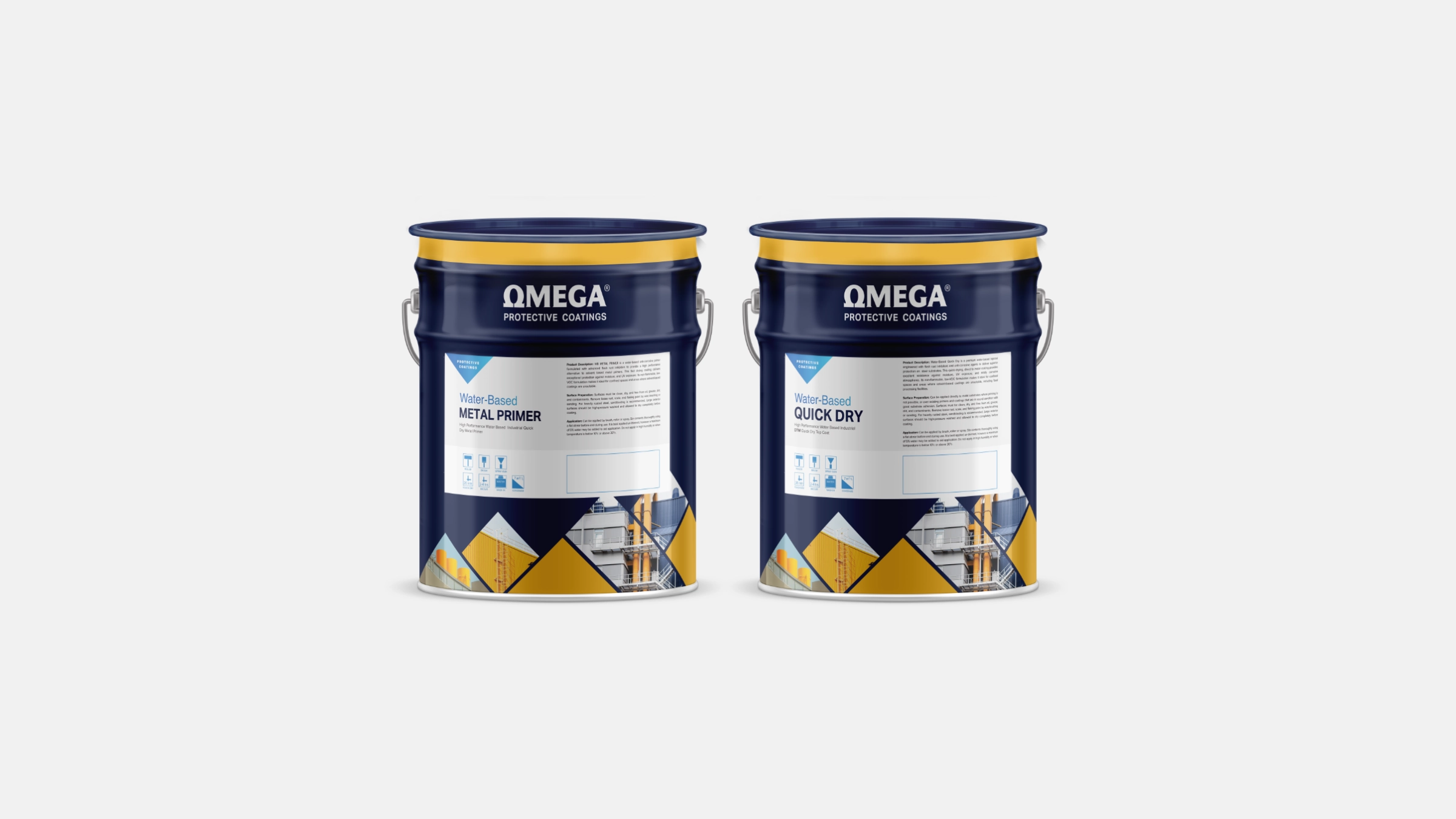
The Water Based Metal Primer is a low sheen anti-corrosive base coat that builds 50 to 60 microns dry per coat and covers 6 to 7 square metres per litre. The Water Based Quick Dry is a gloss top coat that can also go direct to a properly prepared substrate where priming isn't possible. Both are touch dry inside 20 to 40 minutes and hard dry in 4 to 6 hours under normal conditions. They go on by brush, roller or spray, airless or conventional air, and clean up with water.
Getting the best results on site
Water based coatings dry differently to solvent ones. The water has to evaporate and the acrylic has to knit together into a film, and a few conditions on site make the difference between a fast, even cure and a coat that stays soft. These are worth passing to your applicators.
Keep the film build to spec. Each coat is designed for 140 to 165 microns wet, which dries back to 50 to 60 microns. A coat laid on much heavier than that will skin over on top while the water underneath is still trapped, and it can stay wet for hours. Thin, even coats dry quickest.
The product sprays well through both airless and conventional air guns. On airless, a fine finish tip in the 0.012 to 0.015 inch range (12 to 15 thou) suits these coatings. The finer end keeps each coat thin and even, which is what helps a water based film dry quickly; the larger 0.017 to 0.019 inch tips painters often default to move more material per pass and make it easy to put the coat on too thick. On a conventional air or HVLP gun a fluid tip around 1.4 to 1.8 mm gives good atomisation. Whichever method you use, if you thin to aid spraying, keep it to no more than 5% water.
Watch the temperature and the steel. Apply above 10°C and keep the surface above 10°C while it cures, and stay under 85% humidity. Heavy steel sections hold the cold and can sit below the surrounding air temperature, especially overnight, which slows the water off and can leave condensation on the surface. On a cold morning, let the steel warm up before coating and give the film daylight hours to cure.
Applied to spec and in the right conditions, the water based system dries and protects every bit as well as the solvent products it replaces, without the safety and storage load that comes with them.
If you want to trial it or talk through a switch on a specific job, get in touch and we'll work it through with you.


