


What are floor coatings
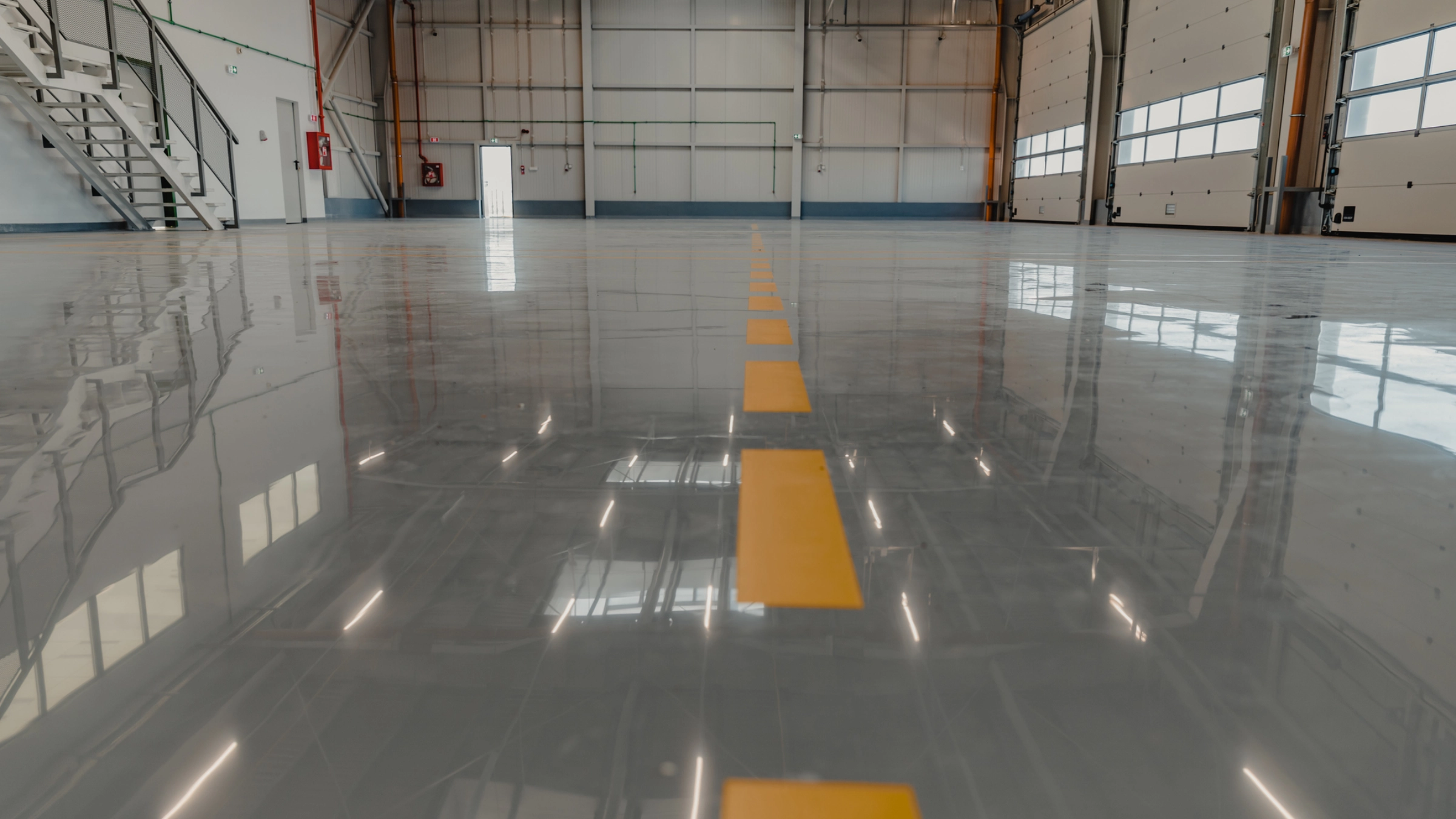
Floor coatings are protective layers applied over concrete or other flooring to improve its strength, appearance and function. They're usually based on epoxy, polyurethane or methyl methacrylate (MMA), each suited to different conditions. Whether you're upgrading an existing facility or fitting out a new one, the coating is a long-term part of how the floor performs, protects and complies.
Where a coating earns its keep
A good floor coating does more than cover the slab. It helps prevent accidents, stops contamination and keeps maintenance simple. These are the main ways it improves safety and hygiene.
Fewer slips and falls.
Slips and falls are among the most common injuries in industrial facilities, especially where liquids, oils or fine dust are around. Anti-slip additives give the coating a textured, grippy surface that improves traction underfoot, which matters most in food processing and warehousing where spills are unavoidable.
A sealed surface that resists contamination.
Bare floors absorb spills, harbour bacteria and develop microcracks where contaminants settle and grow. An epoxy coating creates a sealed, non-porous surface that blocks moisture, dirt and microbial build-up. That's essential in clean-sensitive industries like pharmaceuticals, electronics and healthcare.
Easier cleaning.
Porous floors trap dirt and make cleaning slow and inefficient. A coated floor gives a smooth surface that resists stains and build-up, so routine cleaning is faster and more effective. That lowers labour hours and the risk of failing a hygiene audit.
Durability under hard use.
Industrial floors cop forklifts, pallet jacks, foot traffic and chemical spills. Left unprotected they wear quickly, which leads to cracks, hazards and costly repairs. Epoxy and polyurethane coatings are built to resist abrasion, heavy loads and harsh chemicals, so the floor stays sound and safe for longer.
Built-in visual safety.
In a busy facility, clear visual cues cut risk. A coating can colour-code the floor into pedestrian walkways, forklift lanes, danger zones and equipment stations, turning the floor itself into part of the safety system.
Less downtime with fast-cure options.
Downtime costs money, especially in round-the-clock operations. Many epoxy systems are made for fast application and curing, taking foot traffic within hours and heavy loads soon after, so a floor can be repaired or upgraded without a long shutdown.
Compliance with the standards.
Food, healthcare and manufacturing sites have to meet strict safety and hygiene rules. Certified coatings give you documented chemical resistance, low toxicity and environmental safety. Some are also approved for contact with drinking water.


